
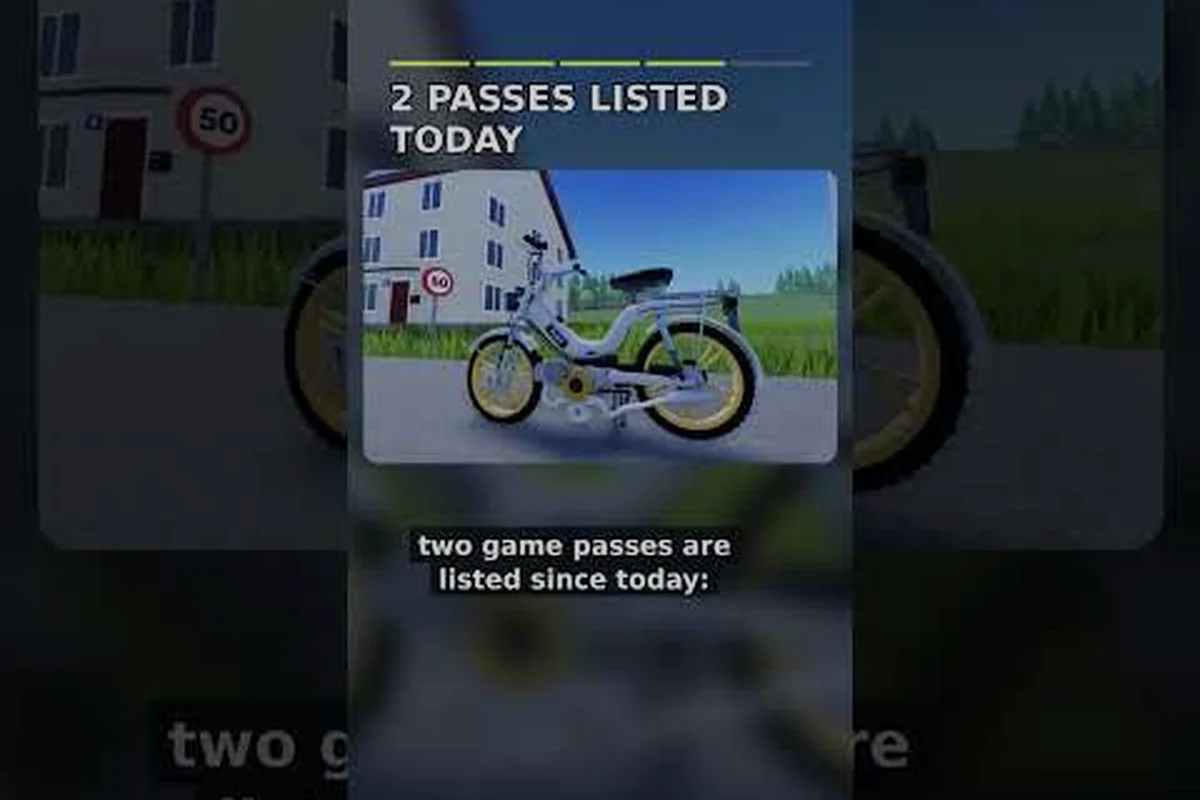
Knowing where to buy fuel in German Moped Days keeps your two-stroke moped running instead of stranded on the roadside, and it matters from your very first kick-start. This guide breaks down every fuel station, price tier, and tank refill habit you need to ride the open German map without wasting euros.
The Two-Stroke Fuel System Explained
Fuel in German Moped Days is not a background stat that quietly refills itself. It is a core survival mechanic tied to the two-stroke engine that every classic moped runs on, which means running dry is a real risk on longer routes. According to the official German Moped Days page, the experience launched in open beta on October 3, 2026, by solo developer 123xPhilx321, and it has already passed 1.23 million visits with roughly 7.5 thousand favorites and a user rating near 86/100.
The developer built the game around relaxed rides rather than racing, so fuel management is deliberately gentle but still meaningful. You kick-start the engine by hand, blend your own two-stroke mix, and cruise an open map that rewards planning over speed. Because the game is still in beta, the developer notes that bugs are expected and invites feedback through the in-game phone or Roblox itself.
A few fundamentals shape every fuel decision you make: the two-stroke mix you hand-blend determines whether your engine runs clean or stalls, tank capacity differs across moped models and directly caps your range, and the fuel gauge ticks down in real time as you ride, so ignoring it mid-route means pushing your moped back. Because station prices vary by location and some pumps offer night discounts, when and where you fill up shifts your euro balance as much as how you ride.
-
Two-stroke fuel must be blended, not simply pumped, so oil and gasoline both matter.
-
Tank capacity varies by moped model, which changes how far a single fill takes you.
-
Fuel levels drop as you ride, and the gauge warns you before the tank hits empty.
-
Station prices differ across the map, so where you buy affects your euro balance.
-
Night discounts appear in some locations, making timing part of the strategy.
Understanding these five points separates a smooth cruise from a constant walk back to the nearest pump. The rest of this guide walks through stations, prices, tanks, and levels in order, so you can plan a route that never leaves you pushing a dead moped uphill.
Why Fuel Is a Survival Mechanic
The official description frames the game as a Beta that expects bugs, and fuel sits right at the center of that design. A two-stroke moped needs a blended mix to run, so you cannot treat gasoline as a single resource. Players report that running out mid-route forces a slow walk back, which is why fuel planning earns its place as a beginner priority rather than an advanced optimization.
The Beta Context That Affects Fuel
Because German Moped Days is a Roblox-only release with no external store listing, all fuel behavior lives inside the game client. The official page shows a live "updated" date of October 26, 2026, reflecting a fast patch cadence, so small fuel tweaks can appear between sessions. Treat any specific price as a snapshot and re-check the pump when a new patch lands.
Where to Buy Fuel: Every Station Type
Finding a fuel station in German Moped Days is straightforward once you know the map layout, but the game hides a few trade-offs in plain sight. Stations cluster around populated areas and main roads, while quieter rural pumps often charge less because fewer riders pass through. The table below summarizes the station types most players encounter and what each one is best for.
| Station Type | Typical Location | Price Tier | Best For |
|---|---|---|---|
| Urban pump | City center, busy roads | High | Quick top-ups mid-route |
| Suburban station | Residential outskirts | Medium | Balanced price and access |
| Rural pump | Countryside, side roads | Low | Cheap full tanks |
| Highway stop | Main connecting roads | High | Emergency refuels only |
| Night-discount pump | Select locations after dark | Low | Saving euros on big fills |
The pattern is simple: the busier the area, the higher the price. If you want the cheapest fuel, ride out to a rural pump and fill the tank completely rather than topping up at an urban station. That single habit saves more euros over a session than any other fuel decision.
Urban vs Rural Fuel Stations
Urban pumps win on convenience because they sit on the routes you already ride, but that convenience carries a premium. Rural pumps reward a short detour with noticeably lower prices, and they rarely have queues. If your route already passes through the countryside, plan your fill there instead of waiting for a city station.
Checking Pump Prices Before Filling Up
Before you commit to a pump, check two things: the posted price and your current fuel level. If your tank is above half, a cheap rural fill is worth the detour; if you are nearly empty, take the nearest station regardless of price. A fuel types breakdown explains how each blend interacts with your engine, which matters when you switch between stations.
Fuel Prices and How to Pay Less
Fuel price in German Moped Days follows a location-based logic rather than a fixed global number, so the same fill can cost very different amounts depending on where you stop. Community data suggests that fuel is cheaper at night in select locations, which turns timing into a genuine money-saving tool. The table below compares the practical price bands players report and the savings each strategy delivers.
| Strategy | Relative Cost | Effort | Savings Potential |
|---|---|---|---|
| Fill at urban pump | Highest | None | Lowest |
| Fill at suburban station | Medium | Small detour | Moderate |
| Fill at rural pump | Lowest | Longer detour | High |
| Fill at night discount | Low | Wait for night | High |
| Partial top-up only | High per liter | None | Negative |
The clearest takeaway is that partial top-ups are the worst value in the game. Buying a little fuel often means paying the highest per-liter rate repeatedly, while a single full tank at a rural or night-discount pump locks in the lowest rate. If you want a deeper look at timing, the night fuel discount guide covers when prices drop and how to schedule rides around them.
Timing Your Fill Around Night Prices
Night discounts reward patience. If your tank can survive until dark, waiting for the cheaper rate is almost always worth it, especially for a full fill. Riders who plan evening sessions around a night pump consistently report lower fuel spending than those who refuel whenever the gauge dips.
The Real Cost of Topping Up
A top-up feels cheap because the individual transaction is small, but the per-liter rate is the highest on the map. Over a full session, repeated top-ups drain your euro balance faster than one planned full tank. Treat the gauge as a planning tool, not a trigger for the nearest pump.
Understanding Your Fuel Tank and Levels
Your fuel tank in German Moped Days is model-specific, and the tank you ride directly changes how often you need to stop. A larger tank means fewer station visits and more uninterrupted cruising, while a smaller tank demands tighter route planning. The moped list breaks down tank sizes and stats across every model, which helps you pick a ride that matches your fuel habits.
Fuel levels work on a simple gauge that warns you before the tank runs dry. The warning gives you enough time to reach a station if you act immediately, but ignoring it usually means walking. The table below maps gauge readings to the action each one calls for.
| Gauge Reading | Meaning | Recommended Action |
|---|---|---|
| Full | Tank at capacity | Ride normally, no stop needed |
| Above half | Comfortable range | Plan a cheap fill at next rural pump |
| Around a quarter | Getting low | Head toward the nearest station |
| Warning light | Critically low | Refuel immediately, no detours |
| Empty | Engine stopped | Walk to the closest pump |
The gauge is a predictive tool, not just a warning system — and in German Moped Days, treating the warning light as your primary fuel strategy is how you end up pushing a moped down a rural road. Each model's tank drains at a different rate depending on your route and riding style, so the quarter-tank mark is your real decision point: that is when you should already be scanning for a fuel station rather than waiting for the light. Once the warning triggers, you have a narrow reserve window — enough for a short detour to the nearest pump, but not enough to gamble on a cheaper station further ahead. Cross-reference your model's tank size against the table above and the moped list so you know your exact range before you leave, because the cost of misreading the gauge is measured in kilometres walked, not euros saved.
How Tank Size Changes Your Route
A bigger tank lets you chain longer routes without a station stop, which suits riders who prefer open-road cruising. A smaller tank forces more frequent fills, so pair it with rural pumps to keep costs down. Matching tank size to your play style is more useful than chasing the fastest model alone.
Stalling After an Empty Tank
Running dry stops the engine and leaves you walking, which is slow and frustrating on long routes. Players report that the walk back is the single most annoying fuel mistake, and it is entirely avoidable with a glance at the gauge. Refuel at a quarter tank and you will rarely see the empty state at all.
Practical Refueling Tips for New Riders
Refueling well is a habit, not a single trick, and a few repeatable steps keep your moped running and your euros intact. The checklist below covers the routine that experienced riders follow every session: confirm your fuel level before committing to a long route, map the cheapest rural or night-discount fuel station along your path, fill the tank completely rather than topping up, and blend the two-stroke mix correctly before you ride. Each step guards a different failure mode — a misjudged fuel level strands you mid-route, a missed discount station quietly inflates your per-liter cost, and a thin two-stroke mix risks engine damage that no fuel price can offset.
- Check the fuel gauge before every long route.
- Identify the nearest rural or night-discount pump on your path.
- Fill the tank completely instead of topping up.
- Blend the two-stroke mix correctly before riding.
- Re-check prices after each game update.
- Keep a small euro buffer for emergency urban fills.
Following this routine turns fuel from a constant worry into a background task. The fuel-saving guide expands on each habit with euro-level detail, and it pairs well with the checklist above for riders who want to squeeze every last kilometer from a tank.
Refueling on a Predictable Schedule
A routine removes decision fatigue. If you always check the gauge before a route and always fill fully at a cheap pump, you stop making rushed choices at expensive urban stations. Map this to the German moped days fuel loop: reserve your fill-up for the autobahn-adjacent stations where the per-liter price runs several cents under the inner-city pumps you pass mid-route. Set a hard refuel threshold — say, topping off once your fuel level drops below half a tank — so you never gamble on reaching the next cheap station. That single habit keeps your fuel tank predictable and your fuel price per kilometer low, no advanced knowledge required.
When to Break the Routine
Emergencies override the routine. If the warning light is on and the nearest rural pump is far, take the closest urban station and accept the higher price. A costly fill beats a long walk every time, and the routine resumes on your next ride.
Choosing Fuel by the Bike You Ride
Different mopeds reward different fuel strategies, so the best plan depends on what you ride. A moped comparison helps you weigh tank size against speed and price, which matters when fuel efficiency is your priority. The table below pairs common riding goals with the fuel approach that fits them.
| Riding Goal | Recommended Fuel Approach | Why It Works |
|---|---|---|
| Long open-road cruises | Large tank plus rural full fills | Fewer stops, lowest per-liter cost |
| Short city trips | Small tank plus night fills | Cheap rate, minimal range needed |
| Mixed routes | Medium tank plus suburban fills | Balanced price and access |
| Budget-focused play | Rural pumps plus full tanks | Maximum savings per session |
| Casual relaxed rides | Any pump, full fills only | Simple, avoids top-up waste |
The through-line is that full fills at cheap pumps beat every alternative. Whatever you ride, the goal is the same: buy fuel at the lowest rate you can reach and fill the tank completely. That single principle covers almost every fuel decision in the game.
Fuel Strategy for Casual Players
Casual riders do not need to optimize every euro. A simple rule, always fill fully at whichever pump is closest when the gauge hits a quarter, keeps you riding without spreadsheets. The savings come automatically from avoiding top-ups. This matters because topping up frequently means repeatedly paying for small volumes, and German fuel stations rarely reward that habit — the advertised per-liter price is fixed regardless of how much you buy, so a 2-liter splash costs the same per liter as a full tank. Filling completely when the gauge reaches a quarter also protects your fuel tank from condensation, which is a real concern on older mopeds that sit between rides. If you ride roughly 100 km a week on a 50cc machine averaging 2.5 L/100 km, one full fill lasts about two weeks, meaning you visit a fuel station only twice a month instead of six or seven times. Fewer stops at the pump translate directly into fewer chances to overspend on snacks, drinks, or impulse buys at the station shop — a hidden cost that often exceeds any per-liter savings from chasing cheaper fuel.
Fuel Strategy for Budget Players
Budget-focused riders should chase rural and night-discount pumps deliberately. Plan routes that pass a cheap station, wait for night prices when possible, and never top up. Over many sessions, these choices compound into a noticeably larger euro balance.
Frequently Asked Questions
Where do I buy fuel in German Moped Days?
Fuel stations appear across the map, with urban pumps in city centers, suburban stations on the outskirts, and cheaper rural pumps along countryside roads. Ride to any station and interact with the pump to refill your tank. Rural and night-discount locations offer the lowest prices for a full fill.
Why is fuel cheaper at some stations?
Price depends on location rather than a fixed global rate. Busy urban areas charge more because riders pass through constantly, while quiet rural pumps and select night-discount locations charge less. Choosing where and when you buy is the main way to control your fuel spending in German Moped Days.
How do I know when my tank is low?
Your moped's fuel gauge shows the current level, and a warning light appears when the tank is critically low. Treat the warning as your last comfortable window to reach a station. Refueling around a quarter tank keeps you from ever running dry on a route.
Does tank size affect how often I refuel?
Yes. Larger tanks hold more fuel and let you ride longer between station visits, while smaller tanks require more frequent fills. Pairing a small tank with cheap rural pumps keeps costs down. Check each model's tank size before buying if fuel range matters to you.
Can I run out of fuel completely?
Yes, and running dry stops the engine and forces you to walk to the nearest pump. It is slow and frustrating, especially on long routes. Watching the gauge and filling fully at cheap stations prevents this entirely, so the empty state is almost always avoidable.
Fuel in German Moped Days comes down to three habits: know where the cheap stations are, fill the tank completely instead of topping up, and watch the gauge before every long route. Riders who follow those three rules spend less, stop less often, and spend more time cruising the open German map. With the station types, price bands, tank sizes, and gauge readings covered here, you have everything needed to keep a two-stroke moped running from the first kick-start to the last kilometer of the session.