
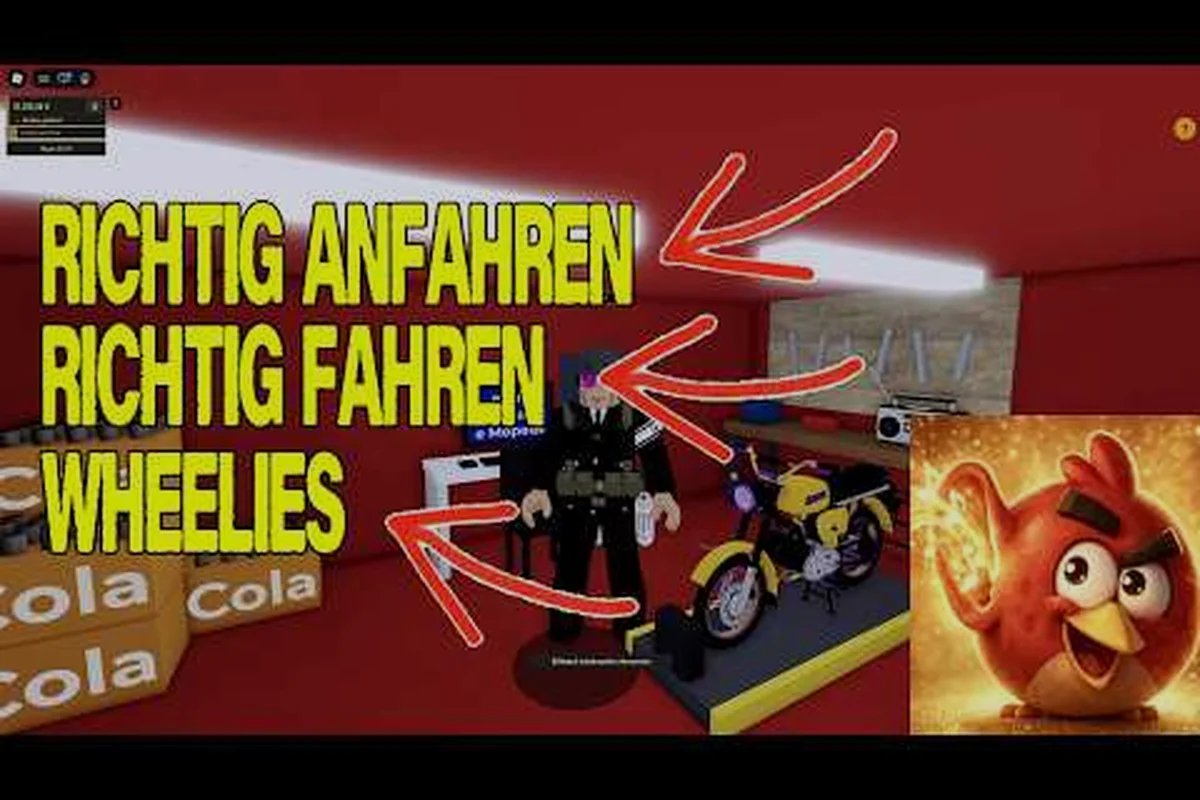
Riding a moped in German Moped Days looks simple until the bike wobbles, stalls, or refuses to lift its front wheel. This guide breaks down German Moped Days how to ride from the first kick-start to your first clean wheelie, so you spend less time crashing and more time cruising the countryside.
The game is a chill, small-community Roblox experience where up to 20 players share a server and ride tuned two-stroke mopeds across open German roads. Because the physics lean toward realism rather than arcade speed, understanding your controls and throttle habits early saves hours of frustration. Get the basics right and every delivery run, hill climb, and stunt attempt becomes far more enjoyable.
Understanding the Riding Basics
Before you touch the throttle, you need to know what the game actually asks of you. German Moped Days is built around a ritual loop: spawn on the map, find your starting moped, kick-start the two-stroke engine, mix the correct fuel, then ride. Skipping any step leaves you stranded with a dead bike and no way to earn Euros.
The riding model rewards smooth inputs over aggressive ones. The moped accelerates gradually, leans into turns, and loses grip if you slam the brakes mid-corner. New riders who treat it like a racing game usually spin out within the first minute, while patient riders who feather the throttle stay upright and fast.
Here is the core loop every session follows:
-
Spawn and locate your moped at the garage or roadside spawn point
-
Kick-start the engine with the manual start input before anything else
-
Check and mix fuel so the two-stroke engine runs cleanly
-
Accept a delivery job to earn Euros and XP
-
Ride, tune, and repeat as your bike and bank balance grow
If the kick-start or fuel steps still confuse you, the engine start walkthrough covers the exact sequence in detail. Getting that first ignition right is the single biggest hurdle for new players, and everything else in this driving guide builds on it.
German Moped Days Moped Controls Explained
Your moped controls are the foundation of every maneuver, from a gentle cruise to a full wheelie. The default layout maps throttle, brake, steering, and lean to separate keys, and each one behaves differently depending on your speed. Understanding what each input does prevents the most common beginner crashes.
Throttle is progressive, not binary. Tapping it gives a small push, while holding it builds speed steadily. Braking too hard locks the rear wheel and skids the bike sideways, so you want short, repeated taps when slowing down. Steering is responsive at low speed but twitchy at high speed, which is why experienced riders ease off the throttle before sharp turns.
| Control | Keyboard Default | What It Does | Beginner Mistake |
|---|---|---|---|
| Throttle | W or Up Arrow | Accelerates the moped forward | Holding it fully from a standstill |
| Brake | S or Down Arrow | Slows and stops the bike | Slamming it mid-corner |
| Steer Left | A or Left Arrow | Turns the front wheel left | Turning hard at top speed |
| Steer Right | D or Right Arrow | Turns the front wheel right | Overcorrecting after a wobble |
| Lean | Shift or dedicated key | Tilts the bike for balance and wheelies | Ignoring lean entirely |
| Kick-Start | E or interact key | Starts the two-stroke engine | Forgetting it after a stall |
The lean input is the one most players overlook, yet it controls both cornering stability and wheelie angle. Pulling back on the lean while accelerating lifts the front wheel, while pushing forward keeps it planted during turns. Mastering this single control separates riders who wobble from riders who glide.
German Moped Days Mobile Controls
Playing on a phone changes how you interact with the moped, but the underlying physics stay identical. The mobile layout replaces keyboard keys with on-screen buttons and a virtual joystick, so your thumb placement matters as much as your timing. Players who adapt their grip early find mobile riding just as smooth as desktop.
The joystick handles steering and lean in one gesture, which means a single thumb controls both direction and balance. Throttle and brake sit as separate buttons on the opposite side, letting your other thumb manage speed. Because the screen is smaller, accidental taps are common, so keep your fingers clear of the brake unless you actually need it.
| Mobile Element | Location | Function | Tip |
|---|---|---|---|
| Virtual Joystick | Left side | Steering and lean | Push up gently for wheelies |
| Throttle Button | Right side | Accelerate | Hold steady, do not mash |
| Brake Button | Right side | Slow down | Tap lightly to avoid skids |
| Kick-Start Button | Center or prompt | Start the engine | Tap once, wait for ignition |
| Interact Button | Context prompt | Fuel, jobs, garage | Appears near objects |
One mobile-specific habit helps a lot: tilt your device slightly when leaning into turns, because the joystick responds to subtle directional pressure. If your phone lags during a wheelie attempt, lower the graphics settings before blaming your timing. Reported by players, mobile frame drops are the most common cause of failed stunts on older devices.
How to Drive Smoothly on German Roads
Smooth driving is less about speed and more about anticipation. The German countryside roads curve, rise, and dip, and your moped reacts to every slope. Reading the road ahead lets you adjust throttle and lean before a turn instead of during it, which keeps the bike stable and your delivery intact.
Start every ride by warming up the engine with a few gentle throttle taps. A cold two-stroke engine stutters and can stall if you demand full power immediately. Once it idles evenly, ease into the throttle and let the moped build momentum naturally rather than forcing it.
Key habits for a clean cruise:
-
Brake before the corner, not inside it, so the tires keep grip
-
Lean into turns using the lean input to stay balanced
-
Ease off the throttle on downhill sections to avoid overspeeding
-
Watch your fuel gauge so you do not stall far from a station
-
Keep a steady line instead of weaving, which upsets the bike's balance
Fuel management ties directly into smooth driving, since a sputtering engine ruins any run. The fuel types breakdown explains which blends suit which engine and how to avoid a mid-route stall. Riders who plan their fuel stops rarely get caught out on long delivery routes.
Pulling Off Your First Wheelie
The wheelie is the signature stunt in German Moped Days, and it is simpler than it looks once you understand the physics. A wheelie happens when the front wheel lifts off the ground while the rear wheel drives forward. To trigger it, you combine throttle with a backward lean at the right moment.
Timing beats force here. Accelerate to a moderate speed first, because a wheelie from a standstill usually flops. Once you are moving, hold the throttle and pull back on the lean input in one smooth motion. The front wheel rises, and your job becomes keeping it up by balancing throttle against lean.
| Wheelie Stage | Input | Common Failure | Fix |
|---|---|---|---|
| Build speed | Hold throttle | Starting from a stop | Reach moderate speed first |
| Lift front wheel | Pull back on lean | Too little lean | Lean further, smoothly |
| Hold the angle | Balance throttle and lean | Over-accelerating | Ease throttle to stabilize |
| Land safely | Release lean, brake gently | Slamming the brake | Tap brake, keep it straight |
Community tutorials, including the Fahr-tutorial and wheelie breakdown from BlockmasterMoped on YouTube, show that the throttle and balance rhythm matters more than raw speed. Watching a rider hold a wheelie reveals how small the corrections are, which is hard to grasp from text alone.
Practice on flat, empty stretches before trying wheelies near traffic or tight corners. A failed wheelie on open ground costs you nothing, while one in a crowded area can wreck a delivery and your bike's condition. Once you can hold a wheelie for a few seconds consistently, you can start chaining them into longer stunt runs.
Tuning and Progression After You Can Ride
Riding well opens up the tuning side of the game, where small mechanical changes transform how your moped handles. Once you can cruise and wheelie reliably, tuning parts let you push speed, acceleration, and stability further. This is where the game shifts from learning to master.
Tuning affects the exact inputs you have been practicing. A bike tuned for acceleration lifts its front wheel more easily, while one tuned for top speed feels heavier in corners. Adjusting your setup without adjusting your riding style usually leads to crashes, so change one thing at a time and test it on a familiar route.
The tuning guide walks through which parts affect which behavior, including the MTX 110 and MTX 130 models that community tutorials cover. Pairing a tuned bike with the control habits from this driving guide gives you a moped that responds exactly how you expect.
Progression also means earning Euros through deliveries, which funds better parts and new bikes. The first ride overview explains how the early economy works and why joining the official group early speeds up your access to updates and codes. Riding skill and economic progress reinforce each other, so improving one naturally lifts the other.
Frequently Asked Questions
What are the default controls for riding a moped?
The default keyboard layout uses W or the Up Arrow for throttle, S or the Down Arrow for braking, and A/D or the arrow keys for steering. A separate lean input handles balance and wheelies, while the interact key starts the two-stroke engine. All of these can be adjusted in the settings menu if the defaults feel awkward.
How do I ride on mobile without crashing constantly?
Use the virtual joystick for steering and lean, and keep your throttle thumb steady rather than mashing the button. Tap the brake lightly instead of holding it, since hard braking skids the rear wheel. Lowering graphics settings on older phones also reduces lag that causes failed wheelies and sudden crashes.
Why does my moped keep stalling?
Stalling usually comes from a cold engine, wrong fuel mix, or demanding full throttle immediately after starting. Warm the engine with gentle throttle taps, confirm you mixed the correct fuel, and let the bike idle evenly before accelerating. A sputtering engine almost always points to a fuel problem rather than a control mistake.
How long does it take to learn a wheelie?
Most riders manage a short wheelie within their first few practice sessions on flat ground. The key is building moderate speed first, then combining throttle with a smooth backward lean. Holding the wheelie takes longer, because it requires constant small throttle and lean corrections rather than one big input.
Can I ride a tuned moped the same way as a stock one?
Not exactly. Tuning changes acceleration, top speed, and weight distribution, so a tuned bike lifts its front wheel more easily and corners differently. Adjust your throttle and lean habits after each tuning change, and test on a familiar route before pushing speed on unfamiliar roads.
Learning to ride in German Moped Days comes down to three things: knowing your controls, respecting the throttle, and practicing balance until it feels natural. Start with the kick-start and fuel routine, master smooth cruising on open roads, then graduate to wheelies on flat ground. Once those basics are locked in, tuning and progression turn a simple moped into a machine you can genuinely control.