
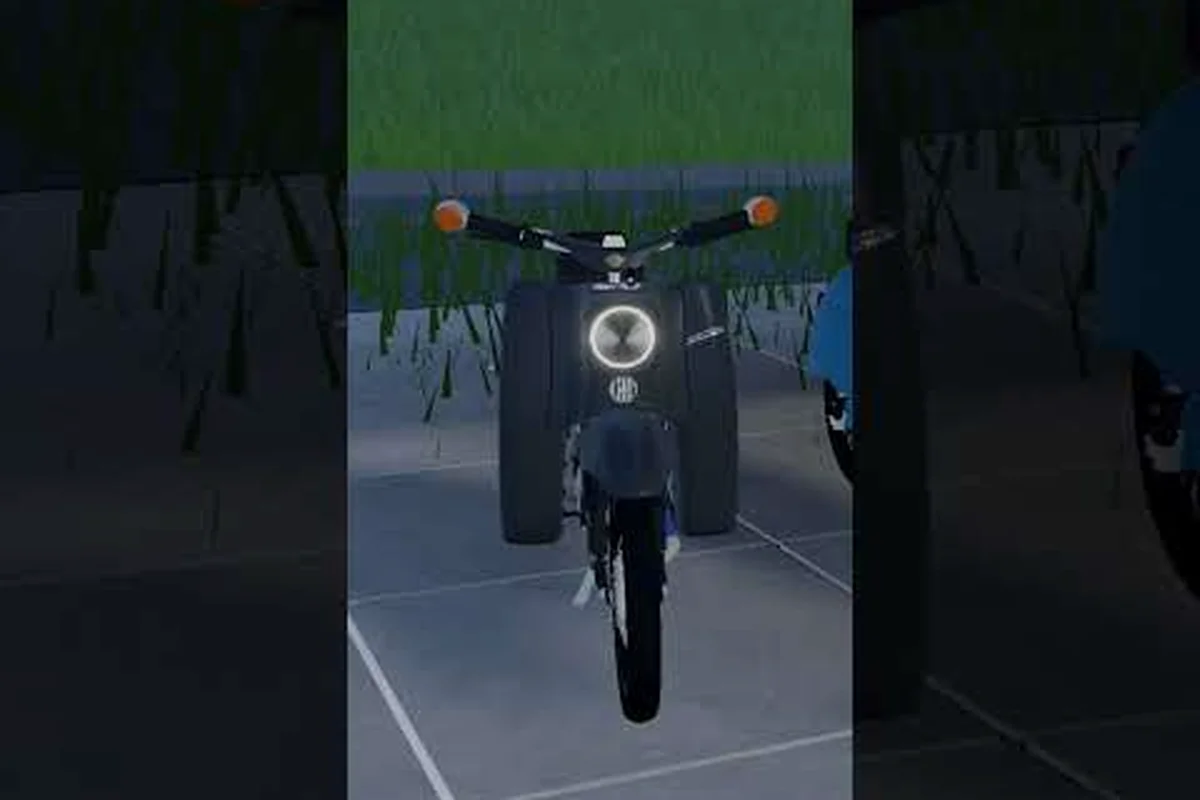
Every ride in German Moped Days begins with a cold two-stroke engine and a manual kick-start, so knowing German Moped Days how to start the engine is the single skill that unlocks the rest of the map. Get the ritual wrong and you will stall at the curb while other riders cruise past.
Why the Starting Ritual Matters More Than You Think
German Moped Days is not an arcade racer where you press a button and launch forward. The core loop is deliberately hands-on: you mount a small-displacement moped, prime a two-stroke engine, kick it over, and only then roll out onto an open map. Community footage of the game, including the Roblox Radar overview video, shows the full starting sequence and a first cruise, which confirms that the kick-start is a real mechanic rather than a cosmetic animation.
That design choice shapes your entire German Moped Days first hour. Because the engine can flood, stall, or refuse to catch, new riders who skip the ritual spend their opening minutes stuck in place instead of exploring. The table below breaks down what each part of the startup actually does.
| Startup Component | What It Does | Common Mistake |
|---|---|---|
| Fuel blend | Feeds the two-stroke engine | Running straight fuel with no oil mix |
| Kick-start lever | Turns the engine over | Tapping it instead of a full stroke |
| Choke / prime | Enriches cold-start mixture | Leaving it open after the engine catches |
| Throttle | Keeps idle from dying | Slamming it wide open immediately |
Treat each row as a checkpoint, because the four failure states are mechanical, not random. A no-start is almost always fuel blend (straight petrol with no two-stroke oil), a half-hearted kick-start lever tap that never completes a full stroke, a choke left open after the engine catches, or a throttle slammed wide open before idle stabilizes. In each case the fix is one adjustment — correct the mix, deliver a full kick, close the choke, feather the throttle — rather than a full restart. Work the table top to bottom before you touch anything else.
The reason this matters for a German Moped Days Roblox guide is that the game rewards patience over speed. Sessions host up to 20 players per server, so the vibe is a small, chill community rolling around an open map rather than a competitive race. Nobody is timing your kick-start, but everyone notices when you are the rider still parked at the spawn point.
Reading the Engine Before You Kick
Before your foot touches the lever, spend a few seconds reading the bike. A cold two-stroke needs a richer mixture, which is why the priming step exists at all. If you have just spawned or just finished a long idle, assume the engine is cold and prime accordingly.
Players report that the engine sound is your best feedback tool. A healthy idle is steady and low; a sputtering note means the mixture is lean, while a heavy, bogged-down note means you have over-primed and risk flooding the cylinder. Learning to hear the difference saves you from repeatedly kicking a bike that is already drowning in fuel.
The Fuel Mix Is Not Optional
Two-stroke engines burn a blend of fuel and oil, and skipping the oil is the fastest way to a dead moped. According to community data, riders who run unmixed fuel either lose power quickly or stall outright, and the repair loop costs more time than the mix ever would have. Always confirm your blend before you mount.
If you are still deciding which bike to learn on, the moped unlock and location breakdown explains where each model spawns and which one is friendliest to a first-time rider.
Step-by-Step: How to Start the Engine
Here is the practical sequence that most riders settle into after a few attempts. It is short, but each step has a purpose, and rushing any one of them is what causes the classic "it just will not start" frustration.
-
Mount the moped and let the camera settle so you can see the handlebars and the kick lever.
-
Check your fuel blend — confirm the tank holds a proper two-stroke mix rather than raw fuel.
-
Prime or choke the engine for a cold start, using a short press rather than holding it down.
-
Give the kick lever one full, committed stroke — a half-hearted tap rarely turns the engine over.
-
Feather the throttle to hold a steady idle once the engine catches.
-
Close the choke so the mixture leans back out for normal riding.
-
Release the brake and roll forward gently before opening the throttle further.
The order matters because priming after a failed kick floods the cylinder, and flooding is the number one reason a moped refuses to start on the second or third attempt. If you do flood it, stop kicking, wait a moment, and let the excess fuel clear before trying again.
| Attempt | What You Did | Likely Result |
|---|---|---|
| First kick, cold, primed | Full stroke with choke open | Engine catches and idles |
| Second kick, no prime | Full stroke, engine warm | Usually starts cleanly |
| Repeated kicks after flooding | Multiple primes stacked | Bogged engine, no start |
| Kick with throttle wide open | Too much air, too little fuel | Weak catch or immediate stall |
Kick-Start Technique That Actually Works
The kick is a timing move, not a strength move. You want one smooth stroke that carries the lever all the way through its travel, because the engine needs continuous rotation to fire. Stopping halfway resets the cycle and wastes the prime you just added.
Riders who struggle usually share the same habit: they kick in short, choppy bursts. Switch to a single deliberate stroke, and the catch rate improves immediately. This is the same principle covered in the beginner kick-start fundamentals, where the focus is on building the habit before you worry about speed.
What to Do When It Will Not Start
Work through causes in order rather than randomly. First, confirm the fuel blend is correct. Second, check whether you have over-primed and flooded the cylinder. Third, verify the choke is in the right position for the engine temperature. Fourth, make sure your kick is a full stroke.
If all four check out and the engine still refuses, dismount, wait a beat, and start the sequence from the top. A clean restart beats a dozen panicked kicks, and it keeps your fuel from draining while you troubleshoot. The reason a full reset works is that the German Moped Days engine models a flooded cylinder: each extra kick with the choke closed adds fuel the spark plug cannot ignite, so the more you kick, the worse the flood gets. Waiting roughly ten to fifteen seconds lets the excess mixture settle, and re-running the sequence from the fuel-blend check re-establishes the correct air-to-fuel ratio before you apply another full kick stroke. If the moped still will not fire after two clean passes through the checklist, stop kicking and re-check the blend itself, since a stale or over-oiled mix will never ignite no matter how many strokes you give it.
Your First Hour: What to Do First
The German Moped Days first hour is really about three things: getting the engine running, learning the controls, and finding your first route. Riders who try to do all three at once tend to stall, crash, or get lost. Sequence them instead.
| Priority | Task | Why It Comes First |
|---|---|---|
| 1 | Start the engine reliably | Nothing else works without a running bike |
| 2 | Learn throttle, brake, and steering | Prevents low-speed crashes near spawn |
| 3 | Pick a short route | Builds confidence before long trips |
| 4 | Join the official group | Gates code redemption and update news |
| 5 | Explore the open map | Where the game's chill riding loop lives |
Joining the official Roblox group early is worth the two minutes it takes, because membership gates code redemption and speeds up access to update announcements. That is a small step that pays off across your whole time with the game.
Once the engine is running and you have a feel for the controls, the first ride walkthrough covers where to actually go and how to settle into the cruising rhythm the game is built around.
Learning the Controls Without Stalling
Low-speed control is where most new riders lose their engine. Holding the throttle steady at a crawl is harder than it sounds on a two-stroke, so practice in an open area before you thread through tight spaces. Feather the throttle rather than pinning it, and use the brake early instead of late.
If you are on mobile, the on-screen layout changes how you hold throttle and brake simultaneously, which is a common source of accidental stalls. Practicing the input rhythm on a quiet stretch of road pays off the moment you hit traffic or a narrow turn.
Picking a First Route
Choose a short, low-traffic loop for your first outing. A route that keeps you within sight of familiar landmarks lets you focus on the engine and controls instead of navigation. Long cross-map trips are better saved for after the startup ritual feels automatic.
Because servers cap at around 20 players, the map rarely feels crowded, which makes early practice genuinely relaxed. Use that breathing room to build muscle memory rather than rushing toward distant destinations. A practical example: on a quiet server you can repeat the full startup sequence — mount the moped, hold the ignition, feather the throttle, and ease off the brake — a dozen times on one straight stretch without another rider clipping you mid-kick. That repetition is what turns the german moped days how to start the engine steps into reflex, so by the time you attempt german moped days how to ride a moped through busier zones, your hands already know the order.
Common Starting Mistakes and How to Avoid Them
Most failed starts trace back to a handful of repeatable errors, and each one has a clear mechanical cause worth understanding before you touch the kickstart. In German Moped Days, the two-stroke engine only fires when three conditions line up at once: a correct fuel-to-oil ratio, enough cylinder compression from a full kick stroke, and an air mixture that matches the engine's temperature. Break any one of those and the moped will cough, sputter, or stay silent no matter how many times you try. Knowing the common mistakes in advance is faster than discovering each one the hard way at the curb, especially during your first hour when the starting window is tight.
-
Skipping the oil mix — two-stroke engines need blended fuel, and unmixed fuel kills power fast.
-
Stacking primes — priming again after a failed kick floods the cylinder and makes the next attempt worse.
-
Half kicks — a partial stroke does not rotate the engine enough to fire.
-
Leaving the choke open — the engine bogs once warm if the mixture stays rich.
-
Pinning the throttle at idle — a cold engine stalls more easily under sudden load.
-
Ignoring the engine note — the sound tells you lean, rich, or healthy before anything else does.
Each of these is a one-second fix once you recognize it, which is why experienced riders rarely spend more than a few attempts getting moving. The beginner mistakes rundown walks through the wider set of early errors beyond the engine itself.
Flooding: The Most Common Stall
Flooding happens when too much fuel enters the cylinder and the mixture becomes too rich to ignite. The symptoms are unmistakable: the engine turns over sluggishly, smells strongly of fuel, and refuses to catch no matter how many times you kick. The fix is counterintuitive — stop kicking, wait, and let the excess clear.
Once the cylinder has had a moment to breathe, restart the sequence with a single prime at most. Riders who understand flooding stop losing entire sessions to it, because they recognize the pattern within seconds instead of after ten failed attempts.
Warm vs Cold Starts
A warm engine needs far less priming than a cold one, and treating them the same is a quiet source of trouble. After a long ride, the engine is already at temperature, so a heavy prime will flood it. After a fresh spawn or a long idle, the opposite is true.
| Engine State | Prime Amount | Choke Position | Typical Kicks Needed |
|---|---|---|---|
| Cold (fresh spawn) | Full short prime | Open | One to two |
| Warm (mid-ride) | None or minimal | Closed | One |
| Flooded | None — let it clear | Closed | Wait, then one |
| After long idle | Light prime | Partially open | One to two |
Reading the engine state before you kick is the habit that separates riders who start cleanly every time from riders who fight their moped at every stop. The table above gives you the read: a cold engine on a fresh spawn wants a full short prime with the choke open, while a warm mid-ride engine needs none or minimal prime and the choke closed. Miss that distinction and you either starve a cold cylinder or flood a hot one, and a flooded moped punishes you with a long wait before it will fire again. Check the temperature, match the prime and choke, then kick.
Riding Smoothly Once the Engine Is Running
Starting the engine is only the gateway. Once it idles, the real skill is keeping it running while you ride, which means managing throttle, brake, and steering as one continuous flow rather than three separate inputs. The moped controls and riding guide goes deeper on input technique, but the short version is simple: smooth beats fast.
Two-stroke engines reward steady throttle and punish sudden changes. Roll on gently, brake early, and keep your speed matched to the space ahead. On an open map with a small player count, there is rarely a reason to ride aggressively, and the game's relaxed pace is the point.
Managing Speed on Open Roads
Open roads invite you to open the throttle, but a small-displacement moped has a narrow power band. Find the speed where the engine sounds comfortable and hold it there rather than chasing a higher number. That steady cruising note is the sign you are riding the bike the way it wants to be ridden.
Long straights are also where you notice fuel consumption, so keep an eye on the tank during extended trips. Running dry mid-route means another cold start on the shoulder, which is exactly the situation the startup ritual is meant to prevent.
When to Stop and Restart
Every stop is a small restart test. If you shut the engine off at a destination, expect a warm start on the way back, which means little to no priming. Riders who forget this and prime heavily end up flooding a perfectly healthy engine and losing minutes to a problem they created.
Building a habit of checking engine temperature before each restart keeps the whole loop smooth. Cold means prime, warm means skip, and flooded means wait. These three rules cover almost every situation you will meet on the road. For example, after a 10-minute fuel stop the cylinder head is still warm enough that a single kick usually fires the engine, while a first start after an overnight park on German Moped Days genuinely needs two or three primer presses. Reading the temperature this way turns guesswork into a repeatable routine.
Frequently Asked Questions
Why does my moped keep stalling right after it starts?
The most common cause is leaving the choke open once the engine is warm, which makes the mixture too rich. Close the choke after the engine catches, then feather the throttle to hold a steady idle. If it still stalls, you likely over-primed and flooded the cylinder.
Do I really need to mix oil into the fuel?
Yes. German Moped Days uses two-stroke engines, which burn a blend of fuel and oil rather than straight fuel. Running unmixed fuel causes rapid power loss and stalls, and the repair loop costs far more time than preparing the blend correctly before you ride.
How many kicks should a cold start take?
A properly primed cold engine usually catches within one or two full strokes. If you are past three or four attempts, stop and reassess rather than kicking harder. Repeated failed kicks usually mean flooding, a wrong choke position, or a fuel blend problem.
Is the starting ritual different on mobile?
The sequence is the same, but the on-screen layout makes holding throttle and brake together trickier, which causes accidental stalls. Practice the input rhythm on a quiet stretch of road first. The core steps — prime, kick, feather, close choke — stay identical across platforms.
What should I do first after the engine starts?
Learn the controls on a short, low-traffic loop before attempting long routes. Joining the official Roblox group early also helps, since membership gates code redemption and speeds up update announcements. Build the startup habit first, then explore the open map at your own pace.
Getting the engine started reliably is the foundation every other German Moped Days skill rests on. Prime correctly, kick with one committed stroke, close the choke once it catches, and read the engine note before every restart. Master that short ritual and your first hour turns into smooth cruising instead of a curb-side troubleshooting session.