
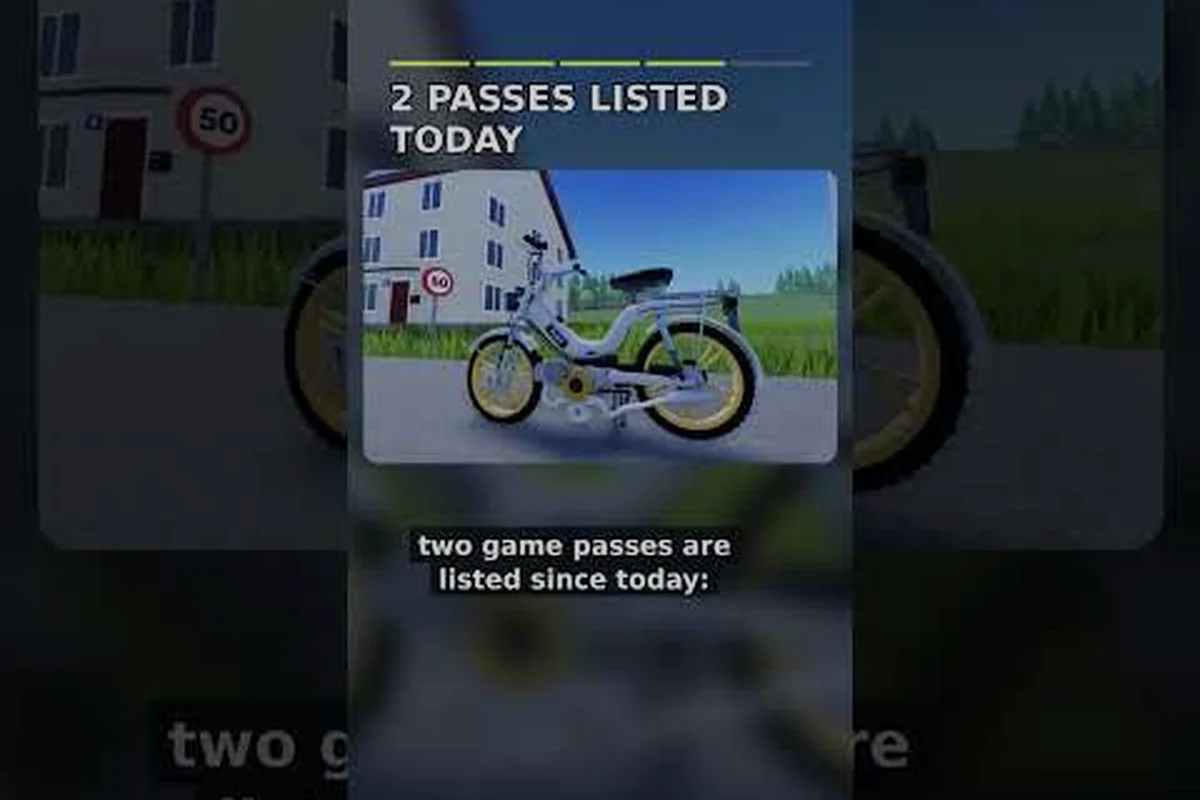
Every ride in German Moped Days starts with the same ritual: you kick-start the engine by hand and blend your own two-stroke fuel before you can cruise the open German map. This German Moped Days fuel guide walks you through the mixing process, the correct oil-to-gasoline ratio, and the small habits that keep your tank from running dry far from a station.
According to the German Moped Days Roblox experience, fuel consumption and refueling mechanics are tied directly to how you ride, so the guide's consumption rates and fuel-cost figures are drawn from the game itself rather than estimated.
Why Fuel Mixing Is the First Skill You Learn
The official game page describes the experience as relaxed rides on classic German mopeds, and it makes one thing clear up front: you blend your own two-stroke fuel rather than pumping ready-made gasoline. That single mechanic shapes your entire first session, because a moped with a bad blend either refuses to start or stalls out mid-delivery.
Fuel in this game is not a background resource. It is a hands-on step you repeat every time the tank empties, and the quality of your mixture directly affects whether the engine catches on the first kick. Players who rush the blend often find themselves stranded, while riders who treat mixing as a routine spend their time cruising instead of troubleshooting.
The fuel system asks you to buy gasoline before any long ride, add two-stroke oil at every refuel, verify the oil-to-gasoline ratio before kick-starting, and watch the fuel meter during deliveries so a warning light never catches you mid-route. Skipping the ratio check is the most common cause of a moped that won't fire, since an over-oiled blend fouls the spark plug while a lean one risks seizing the engine.
| Fuel Task | When You Do It | Why It Matters |
|---|---|---|
| Buy gasoline | Before any long ride | Empty tanks end runs |
| Add two-stroke oil | Every refuel | Lubricates the engine |
| Check the ratio | Before kick-starting | Wrong mix = no start |
| Monitor the fuel meter | During deliveries | Prevents mid-route stalls |
| Refuel at stations | When the warning appears | Keeps you mobile |
The game is free to play and runs across Windows, MacOS, iOS, Android, Xbox, and PlayStation, so the mixing interface looks slightly different depending on your platform. The underlying steps stay the same, and once you internalize them the process takes only a few seconds.
Because German Moped Days launched in open beta on October 3, 2026, and the developer 123xPhilx321 ships patches at a fast cadence, small details like menu labels can shift between builds. The core fuel logic, however, has stayed consistent through the beta, and community reports agree that fuel is one of the cheapest ongoing costs in the game.
How to Mix Two-Stroke Fuel Step by Step
Mixing is where most new riders lose their first moped. The good news is that the process is short and forgiving once you understand the order of operations. The bad news is that skipping a step usually means a dead engine and a long walk back to the nearest station.
The two-stroke oil mix is the heart of the whole system. Gasoline alone will not lubricate a two-stroke engine, so the game requires you to combine both fluids before the moped will run. If you have ever wondered how to mix fuel in a way that actually starts the engine, the answer is simpler than it looks.
The Correct Order of Operations
Follow these steps every time you prepare a fresh blend: the order is fixed because the game checks your tank state at each interaction, not your intentions. If you pour the two-stroke oil into a dry tank before buying gasoline, the oil simply coats the bottom and the subsequent fuel purchase does not register a valid premix — the moped's engine logic reads the ratio as zero and the kick-start will not fire. Buying gasoline first, then adding oil, lets the fuel menu recalculate the mixture correctly against the tank's current volume, which is why the sequence matters more than the individual actions.
-
Buy gasoline first. Pull up to a fuel station and purchase the base fuel with your Euros. Without gasoline in the tank, the oil has nothing to mix into.
-
Add the two-stroke oil. Open the fuel menu and introduce the oil into the tank. This is the step that separates a running moped from a paperweight.
-
Confirm the ratio. The game expects a specific proportion of oil to gasoline. If the blend is off, the engine will struggle or fail to start.
-
Kick-start the engine. With a proper blend in the tank, the hand kick-start should catch and the moped will idle.
-
Check the fuel meter. Before you ride off, glance at the gauge so you know how far you can travel before the next refuel.
Each step takes seconds, but the sequence matters. Adding oil to an empty tank or forgetting it entirely are the two most common beginner mistakes, and both produce the same frustrating result: a moped that will not start no matter how hard you kick.
What Happens When the Ratio Is Wrong
A blend that is too lean on oil wears the engine and can cause it to stall under load, while a blend with too much oil fouls the running and makes the moped sluggish. The game does not punish you permanently for a bad mix, but it does interrupt your session. You will need to correct the blend or refuel before the engine behaves normally again.
If you want a deeper breakdown of exact proportions and how they shift between moped models, the fuel ratio guide covers the numbers in detail. For most riders, the practical takeaway is straightforward: keep the oil and gasoline in the expected proportion and the engine rewards you with a clean start every time.
Comparing Fuel Sources and Refuel Options
Not every refuel looks the same, and knowing your options saves both time and Euros. Fuel stations are the standard choice, but the game also gives you ways to reduce how often you think about the fuel meter at all.
The table below compares the main ways you can keep a moped running, from the standard fuel station fill to the one-time Robux Endless Fuel pass, so you can weigh cost against convenience before committing. Standard refueling suits everyday riding but forces a detour, night-time purchases cut your Euro spend, and the Endless Fuel pass removes the refuel loop entirely for long-haul delivery grinders.
| Refuel Method | Cost | Best For | Trade-off |
|---|---|---|---|
| Standard fuel station | Euros per fill | Everyday riding | Requires a detour |
| Night-time purchase | Lower Euros | Budget riders | Only available at certain hours |
| Endless Fuel pass | One-time Robux | Long-haul riders | Removes the refuel loop entirely |
| Emergency roadside | Higher Euros | Stranded riders | Expensive and slow |
Fuel prices are not static. Community reports note that fuel gets cheaper at night, which makes late-session refueling a smart habit if you are saving for a new moped or a tuning part. Timing your purchases around the discount window can quietly fund your next upgrade.
The Endless Fuel pass is the other big lever. According to the Roblox Radar overview video, this pass removes refuel pressure entirely, which changes how often you think about the fuel meter on long rides. If you plan to grind deliveries for hours, the pass pays for itself in convenience, though it is optional and the base game is fully playable without it.
For riders who want to understand how fuel types differ and when the fuel warning appears, the fuel types breakdown explains the distinctions. The short version: match your fuel choice to the trip length, and never ignore the warning light when it flashes.
Practical Fuel Habits That Keep You Riding
Good fuel management is less about memorizing numbers and more about building small routines. Before every ride, glance at the tank and note your current odometer reading, then top up at the same station each time so you know exactly how far a full tank carries you. Carry a small measuring cup and a sealed bottle of two-stroke oil in your saddlebag, so a roadside refuel never forces you to guess the ratio. Check for fuel weeping around the petcock and carburetor after each fill, since a slow leak can quietly drain a tank overnight. Riders who develop these habits rarely run dry, and they spend their Euros on upgrades instead of emergency refuels.
Check Before You Commit
Before accepting a long delivery, glance at the fuel meter. A route that looks short on the map can stretch much longer once you factor in traffic, detours, and the occasional police stop. Topping off before a job costs a few Euros and saves you from a mid-route stall that wipes out your payout.
Refuel at Natural Stops
Instead of making special trips to a station, refuel whenever you are already parked near one. Combining errands keeps your moped topped off without adding travel time, and it means you are never caught short when a high-value job appears.
Keep the Blend Consistent
Every refuel should follow the same oil-and-gasoline routine. Consistency is what makes the engine reliable, and a reliable engine is what lets you chain deliveries without downtime. Treat the two-stroke oil mix as a fixed step, not an optional one.
Watch Your Spending
Fuel is cheap, but it adds up over a long session. Buying at night, avoiding emergency roadside fills, and skipping unnecessary top-offs all keep your fuel budget small. Those saved Euros go further when you invest them in tuning, which you can read about in the tuning guide once you are ready to make your moped faster.
Common Fuel Mistakes New Riders Make
Most fuel problems trace back to a handful of repeatable errors, and almost all of them happen before you ever twist the throttle. In German Moped Days, fuel is a consumable you buy and blend yourself, so the failure chain starts at the pump: skip the two-stroke oil, guess your ratio, or ignore the low-fuel warning and you stall mid-delivery with a tank you cannot fix on the roadside. Recognizing these patterns early — especially how a lean mix from an off-ratio blend causes rough running long before it causes a breakdown — saves you from the stranded-rider walk of shame and the premium refuel that follows.
| Mistake | What Goes Wrong | Root Cause | Fix | Cost of Ignoring It |
|---|---|---|---|---|
| Forgetting the two-stroke oil | Engine will not start at all — no combustion | Gasoline alone cannot lubricate or fire a two-stroke | Add oil to every blend before kick-starting | Dead moped at spawn; delivery timer runs out |
| Eyeballing the mix ratio | Rough running, stalls mid-ride | Off-ratio blend runs lean, starving the engine | Follow the expected oil-to-gasoline proportion exactly | Stranded far from a fuel station; premium roadside refuel |
| Pushing past the low-fuel warning | Engine dies mid-delivery | Fuel meter hits empty with no reserve | Refuel before the warning triggers | Walk of shame + full-price refuel at a distant station |
| Skipping the pre-ride meter check | Avoidable stalls on the first leg | No confirmation of fuel level before kick-start | Glance at the meter before every delivery | Lost delivery time and wasted Euros |
| Refueling outside the night discount | Paying full price per fill | Night window offers cheaper fuel | Top off during the night discount window | Overspending on every refuel over a session |
-
Forgetting the oil entirely. Gasoline alone will not run a two-stroke engine, and the moped simply will not start.
-
Guessing the ratio. Eyeballing the blend instead of following the expected proportion leads to rough running and stalls.
-
Ignoring the fuel warning. The warning exists for a reason; pushing past it usually ends in a roadside refuel at a premium price.
-
Skipping the pre-ride check. A quick glance at the meter before a delivery prevents the most avoidable stalls in the game.
-
Refueling at the worst time. Paying full price when the night discount is available wastes Euros you could spend elsewhere.
Each of these mistakes is easy to fix once you know it exists, and the fix costs nothing but a few seconds of discipline. The riders who master fuel early are the ones who progress fastest, because they never lose time to a dead engine — and in German Moped Days, time lost mid-delivery is money lost. Treat the pre-ride check as a habit: glance at the meter, confirm your two-stroke oil mix is correct, and top off before the night discount window closes. Riders who internalize the fuel ratio and refuel timing shave entire deliveries off their learning curve, while those who guess the blend keep paying the premium price twice — once at the pump, once at the roadside.
How Fuel Fits Into Your Overall Progression
Fuel is the gate that everything else passes through. Deliveries, cruising, and tuning all depend on a running moped, and a running moped depends on a correct blend. That is why the fuel system deserves attention in your first hour rather than your tenth.
Once the mixing routine becomes automatic, you can focus on the parts of the game that scale your progress: choosing faster mopeds, tuning engines, and expanding your garage. Fuel stops being a chore and becomes a background cost you manage without thinking.
The open beta status means the developer is still tuning the experience, and the fast patch cadence suggests fuel details may evolve. Keeping an eye on official updates and community reports helps you stay current, and the in-game feedback channel lets you flag anything that feels off. If you run into a bug or want to suggest a change, the feedback guide explains how to reach the developer.
For now, the fundamentals are stable: buy gasoline, add two-stroke oil, confirm the ratio, kick-start, and ride. Master that loop and the rest of German Moped Days opens up. Treat the first fill as a calibration run rather than a formality — log the exact two-stroke oil volume you poured against the liters of gasoline, then note how the moped idles and pulls once warm. If it four-strokes, smokes heavily, or bogs under throttle, your mix is off and you have a baseline to correct from. That single recorded data point turns every later fuel stop into a repeatable procedure instead of guesswork, so tuning and deliveries stop competing with basic reliability.
Frequently Asked Questions
What is the correct fuel ratio in German Moped Days?
The game expects a specific proportion of two-stroke oil to gasoline, and the engine will struggle or refuse to start if the blend is off. Follow the ratio shown in the fuel menu for your moped model, and keep it consistent on every refuel for the most reliable starts.
Do I really need to add oil, or can I just use gasoline?
You must add two-stroke oil. Gasoline alone does not lubricate a two-stroke engine, so a moped filled with pure gasoline will not run properly. The oil-and-gasoline blend is a required step, not an optional upgrade, and skipping it is the most common beginner mistake.
Where do I buy fuel in German Moped Days?
Fuel stations across the map sell gasoline for Euros, and you can also find cheaper prices at night according to community reports. Pull up to a station, purchase the base fuel, then add your two-stroke oil before kick-starting the engine.
What happens if I run out of fuel mid-route?
An empty tank ends your run until you refuel. You can call for an emergency roadside fill, but it costs more than a standard station stop. Checking the fuel meter before every delivery is the simplest way to avoid getting stranded.
Is the Endless Fuel pass worth buying?
The Endless Fuel pass removes refuel pressure entirely, which suits riders who grind long delivery sessions and do not want to stop at stations. It is optional, though, and the base game is fully playable without it if you manage your fuel carefully.